
Exterior Renovation Visualization: Show Clients the Concept Before Construction
Exterior renovations are hard to sell from swatches alone — photo-based concepts can help clients understand and react to the proposed direction on their own house.
By Renderspace
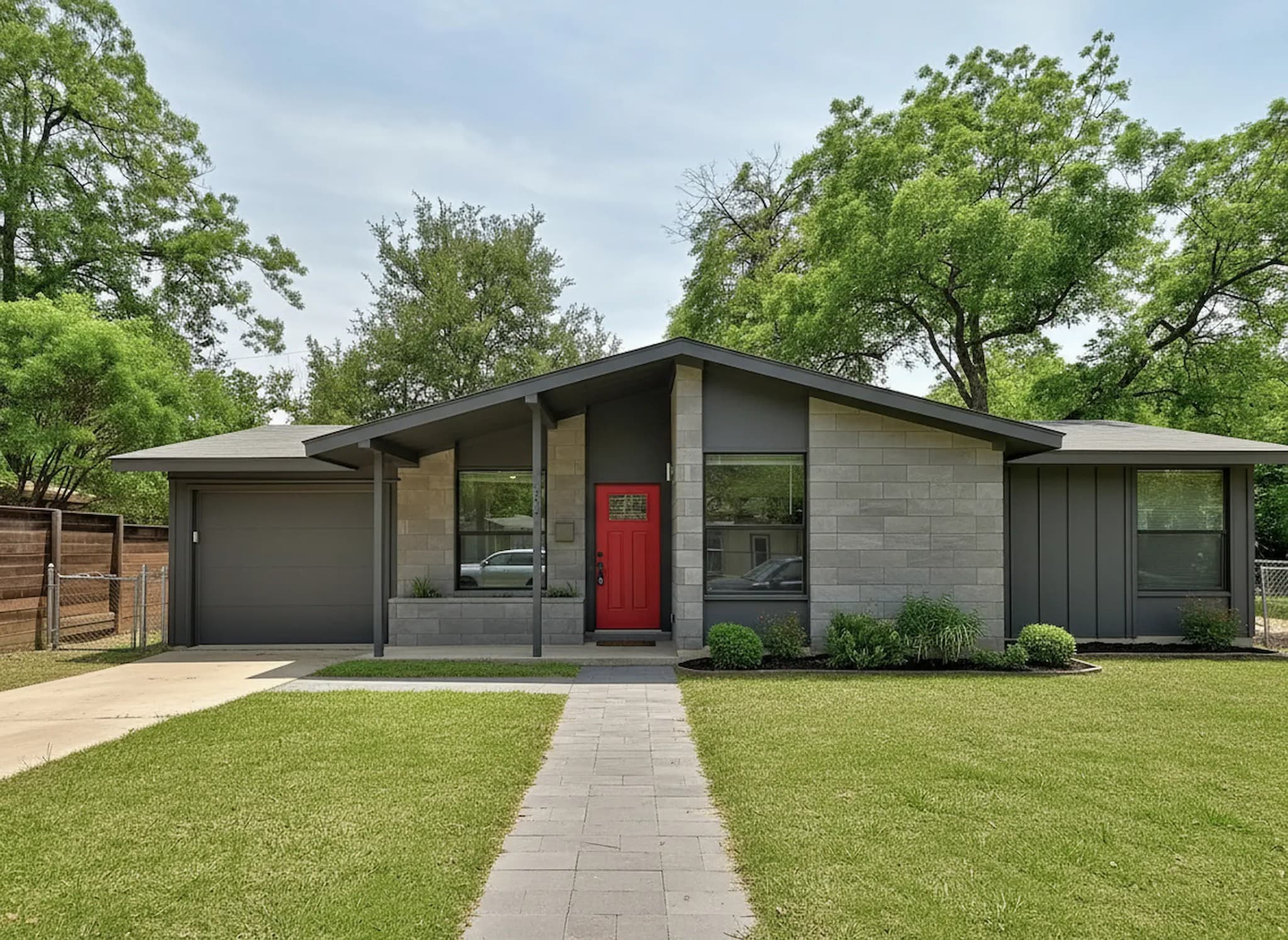
Nobody has ever fully committed to a new siding color from a paint chip alone.
You can walk a homeowner through trim details, describe the new garage door, hold up every swatch in the book — and they still struggle to picture the whole front elevation on their own street. Exterior remodeling carries a specific anxiety: the neighbors will see it, the whole block will see it, and the decision feels permanent in a way interior choices often do not.
That gap — between what you are describing and what they can actually see — is where exterior estimates stall. Not always on price. Often on uncertainty.
Why exterior jobs depend on what the client can see
Interior work gives clients a mental library to draw from: kitchens, bathrooms, layouts they have lived in or toured. A full exterior renovation is different. New siding, a redesigned entry, a different roofline treatment — most homeowners have never seen their own house with those changes applied. They have seen other houses. Their house, with your specific proposal, exists only in your head until you show them.
Visualization closes that gap by putting the proposal on the actual property photo. The client is not extrapolating from a two-inch sample. They are reacting to something that looks like their home with the direction you are proposing.
That reaction — understanding and responding to the concept — is what moves a conversation forward. It is not a guarantee of how they will decide; it is a clearer basis for the decision than description alone.
What this looks like in practice
Take a photo of the actual house: the real siding, roofline, garage door, and context on the street. Upload it, select exterior, and adjust the direction — siding color and material, trim, entry treatment, whatever is on the table. In seconds or minutes you can explore one direction, then a second color, then a trim variation.
Each version costs a generation, not a separate design fee eating margin before the job is signed. You can show two siding options side by side in the same meeting instead of scheduling a follow-up because the client "needs to think about it" without ever having seen the finished look.
For a broader view of what self-serve AI is built for — and what it is not — see AI Landscape Design Software for Contractors.
The psychology underneath exterior hesitation
Exterior decisions carry visibility pressure that interior ones often lack. Homeowners are not just choosing a look they will live with; they are choosing something the street will judge. That makes hesitation rational, not difficult.
A concept on their own house can help clients understand and react to the proposed direction — including how the elevation reads from the curb — before they commit. They are not guessing what the neighbors will see. They are looking at a visualization of it.
That does not remove every objection. It gives the conversation something concrete to react to.
Where self-serve concepts stop — and what comes next
A concept render is not a materials spec, a structural assessment, or a permit document. If a project involves load-bearing changes, significant additions, or anything that requires engineered evaluation, that work still belongs with licensed professionals — the same as it always has.
The visualization's job at the concept stage is alignment: helping the client see the direction before you invest in detailed scoping for a larger structural change.
When a project needs a more formal presentation — a client board meeting, an HOA or design-review submission — Build-Ready Essentials through Human Polish is scoped for that next step: human-produced plans and views built from the survey, photos, dimensions, and project information you provide, reviewed before payment. For how that compares to self-serve and traditional production, see AI Rendering vs. Traditional Rendering Services.
Try it on the next exterior estimate
The First Job Test is $19.99 for 40 credits over 7 days — enough to run photo-to-concept on a real exterior job and see whether showing their own house changes how the conversation goes.
Exterior remodeling will always be a high-stakes, highly visible category. The contractors who reduce guesswork in the sales conversation — by letting clients see the proposal, not just hear it — often find that clarity does more work than another round of verbal description ever could.
Related reading
- AI Landscape Design Software for Contractors: What It Does Well—and What It Doesn't
AI landscape tools are fast at concepts from real photos. They are not site plans, engineered drawings, or permit packages. Here is how to evaluate the category without wasting an afternoon.
- AI Rendering vs. Traditional Rendering Services for Contractors
A contractor-focused comparison of AI self-serve, Human Polish production, and traditional rendering studios across the workflow dimensions that actually matter.