
AI Rendering vs. Traditional Rendering Services for Contractors
A contractor-focused comparison of AI self-serve, Human Polish production, and traditional rendering studios across the workflow dimensions that actually matter.
By Renderspace
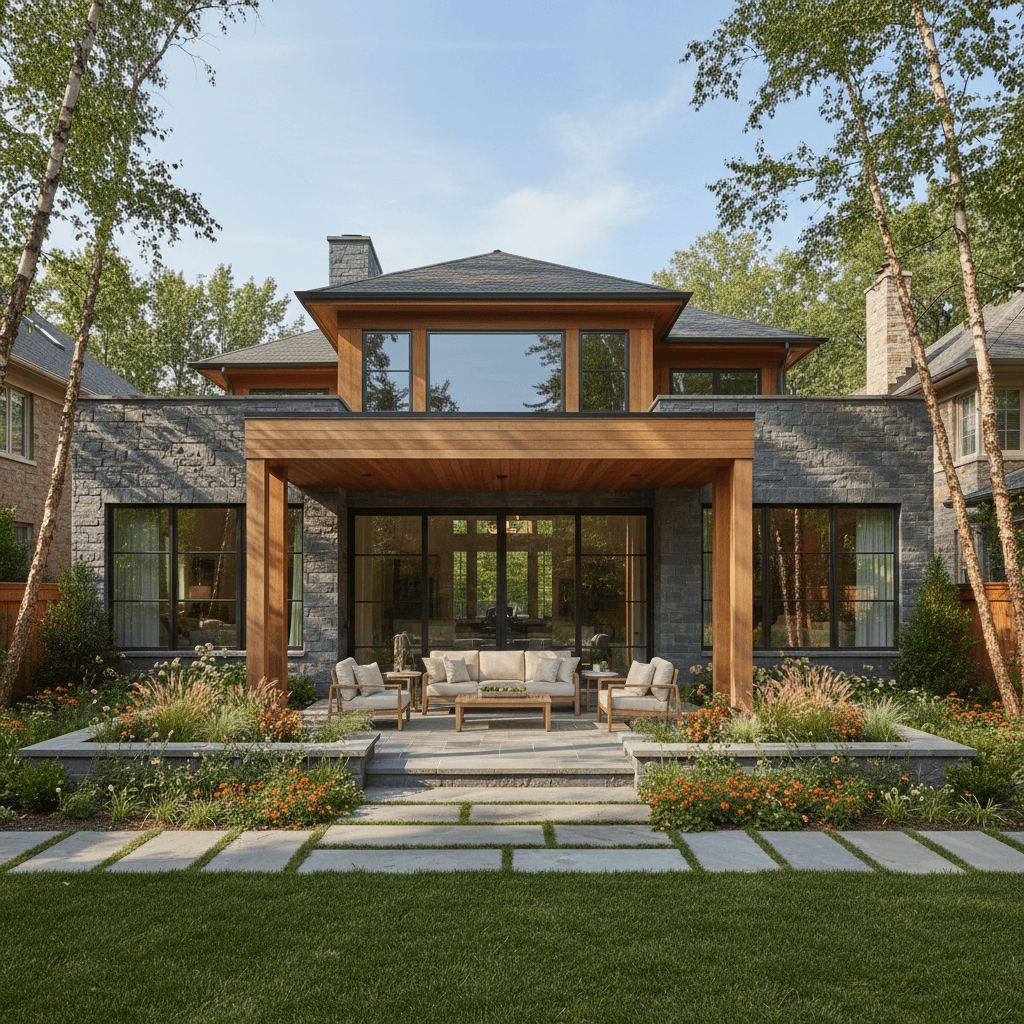
Someone will tell you AI rendering makes traditional studios obsolete. Someone else will tell you AI cannot be trusted for anything that matters. Both are selling something. Neither is giving you the full picture.
Contractors do not need a winner of a technology debate. You need to know which production model fits a given job — early concept on a live estimate, a batch of options for a packed week, or a presentation package for a design-review submission. Here is an honest comparison on dimensions Renderspace can actually substantiate.
What each model is built for
Self-serve AI (Renderspace) — rapid photo-to-concept exploration while you are selling. Upload a job-site photo, generate directions in seconds or minutes, iterate without waiting on a queue. Best when the goal is helping a client understand and react to a proposed direction before you invest heavily in design.
Human Polish — outsourced production when you want the team to handle concept batches (AI Render Packs) or turn an approved direction into a presentation package (Build-Ready Essentials). Scoped before payment; human review on deliverables.
Traditional rendering services — custom studio or freelancer production, typically scoped per project with longer lead times and direct human craft throughout. Best when a job needs fully bespoke, one-off production beyond what self-serve or pack-based workflows are designed for.
None of these replaces architects, engineers, or permit professionals. Visualization — however it is produced — supports sales and presentation. It is not construction documentation.
Comparison by workflow dimension
| Dimension | Self-serve AI (Renderspace) | Human Polish | Traditional rendering service |
|---|---|---|---|
| Turnaround model | Seconds or minutes per concept; you control pacing | Pack-based: 24–48h (25-pack), 48–72h (50-pack), 3–5 business days (100-pack). Build-Ready: 3–5 days (2D) or 5–10 days (3D) | Typically multi-day per deliverable; revision cycles add calendar time |
| Iteration | Unlimited directions at your pace during a session | Defined concept count per pack; Build-Ready scoped to agreed deliverables | Usually priced and scheduled per revision round |
| Control | You prompt, select, and present in real time | You provide brief and source materials; team produces to scope | You collaborate with an assigned artist or studio |
| Accountability | You own output selection and client presentation | Team review before delivery; scoped before payment | Named producer; contractual deliverable |
| Intended use | Early client alignment, on-site selling, fast exploration | Volume concept production; client and HOA/design-review presentation support | Custom production for high-stakes or fully bespoke visual needs |
| Self-serve vs human-produced | Fully self-serve | AI Render Packs: team-generated concepts. Build-Ready: human-produced plans and views | Human-produced throughout |
| Project stage | Discovery and estimate | Mid-pipeline batch work or formal presentation prep | Any stage; often detailed design or marketing-quality production |
| Pricing structure | Subscription / First Job Test at $19.99 (40 credits, 7 days). See pricing | AI Render Packs: $399 / $699 / $1,199 (25 / 50 / 100 concepts; first 25-pack at $349). Build-Ready: $599 (2D) / $899 (3D). See Human Polish | Quoted per project; varies by scope and studio |
Nobody wins every row. That is the point.
Speed: where AI clearly changes the workflow
Traditional rendering involves briefing, production, review, and revision — measured in days, not minutes. That is appropriate when the deliverable is a fully custom production piece.
For early-stage selling, speed changes behavior. When you can show a direction while the client is still standing in the yard, you are not scheduling a follow-up to "see concepts later" — when enthusiasm often cools. Self-serve AI is built for that moment. For more on what the software category is actually good at, see AI Landscape Design Software for Contractors: What It's Actually Good For.
Human Polish sits between the two: faster than a traditional studio for pack-based concept production, with a team accountable for deliverables — but not instant like self-serve.
Accuracy and scope: stay honest about what visualization is
AI concepts are fast and usually directionally right. They are not a substitute for measured site plans, engineered drawings, or permit documents. Proportions and materials can vary between generations. For exploration, that is often fine. For a formal design-review submission, you typically want a human-produced package built from your survey, photos, and project details — which is what Build-Ready Essentials is scoped for.
Traditional studios produce human-checked work throughout, which suits highly custom or marketing-grade production. Human Polish Build-Ready adds human-produced plans and views based on customer-provided information — it does not replace licensed survey, engineering, or permitting work.
Avoid treating any visualization — AI, pack-produced, or studio-rendered — as a guarantee of how a board or authority will rule. Approval remains with the reviewing body.
Accountability: the gap most comparisons skip
A pure self-serve tool gives you what you generate. You choose what to show, and you stand behind that choice with the client.
Human Polish adds a production team and a review-before-payment scope — someone confirms the package fits your project before you commit, and deliverables arrive as an organized package rather than open-ended prompting.
Traditional services add a named relationship and custom scoping — valuable when the job is complex enough to justify that overhead.
The mistake is not picking the "wrong" model once. It is using the same model for every job regardless of stakes, timeline, or who needs to see the output.
How to decide on your next job
Use self-serve AI when you are early in a conversation, on site or between appointments, and need a client to react to a direction quickly.
Use an AI Render Pack when you have more jobs than hours and need concepts produced without touching the tool yourself.
Use Build-Ready when the direction is approved and you need a presentation package that supports client sign-off or HOA and design-review submissions — scoped from the materials you provide.
Use a traditional studio when the project needs fully bespoke, one-off production that goes beyond pack or Essentials scope.
For the broader framework of when outsourced visualization beats hiring or doing it yourself, see Outsourced Visualization for Landscape Contractors.
Compare pricing for self-serve plans, or explore Human Polish when the project needs a team behind it.
Related reading
- AI Landscape Design Software for Contractors: What It Does Well—and What It Doesn't
AI landscape tools are fast at concepts from real photos. They are not site plans, engineered drawings, or permit packages. Here is how to evaluate the category without wasting an afternoon.
- Outsourced Visualization for Landscape Contractors: When It Makes Sense
A practical framework for deciding when to hire, freelance, self-serve, or use Human Polish as your outsourced visualization department.