
Xeriscape Design From a Photo: Sell the Lawn Conversion
How to sell a turf-to-xeriscape conversion by showing homeowners their own yard without the lawn, finished, before you quote, plus how rebates and HOA approvals fit in.
By KeSean Fallon
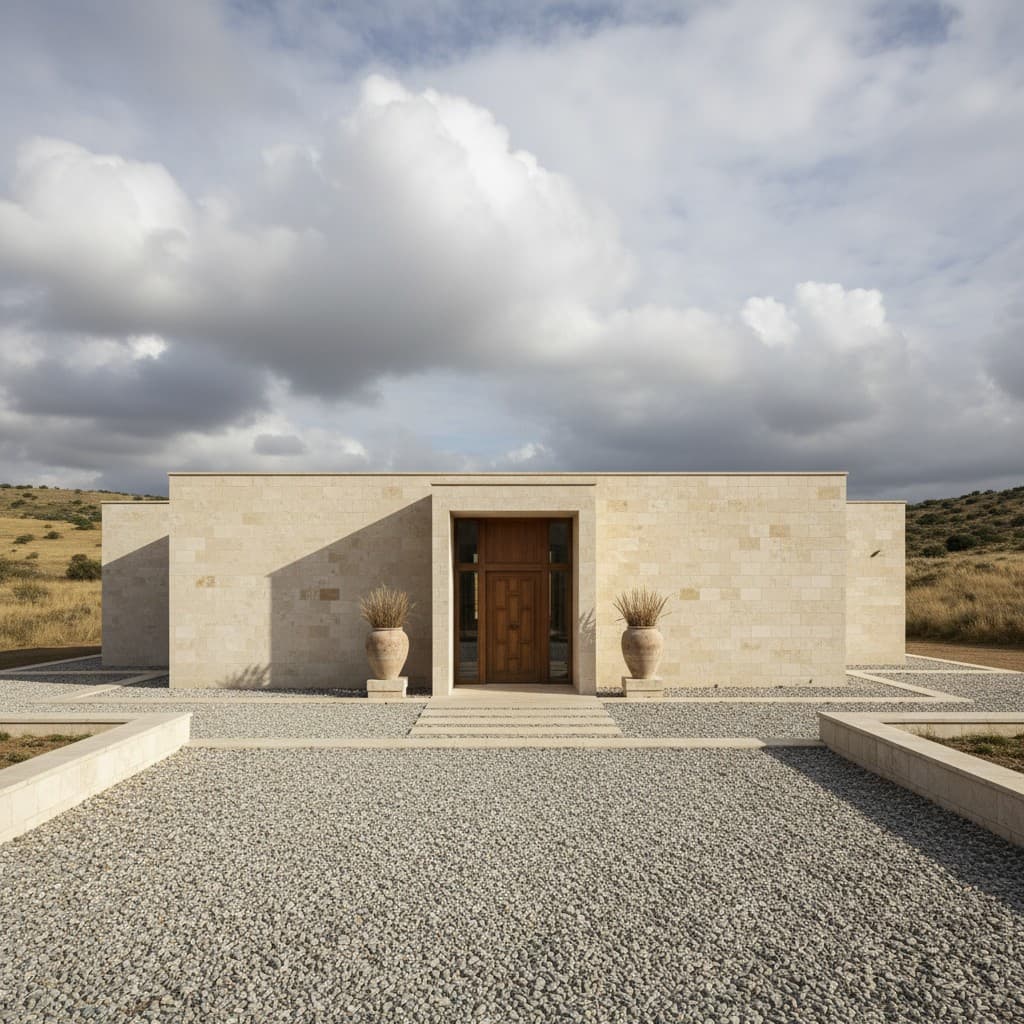
The best way to sell a xeriscape conversion is to show the homeowner their own yard without the lawn, finished, before you quote it. A photo of the existing turf turned into a photorealistic concept of gravel, stone, native plants and a path gives them something to say yes to, instead of a picture in their head of "rocks and cactus."
Xeriscape is one of the easiest jobs to explain on paper and one of the hardest to sell in person. The homeowner likes the idea of a lower water bill. They do not like the idea of their front yard looking like a parking lot.
One of the challenges with xeriscaping in Central Texas is convincing homeowners that removing grass doesn't mean sacrificing curb appeal. I can understand the hesitation. When someone hears "xeriscape," they might picture a blanket of white gravel with three lonely cacti, not a beautiful landscape. But that's a failure of imagination, not the concept itself. I'd start by asking what they actually love about their yard. Maybe it's the shade, the greenery or how the walkway frames the front door. Then I'd show how native planting, limestone borders and carefully placed ornamental grasses can preserve those qualities without relying on a traditional lawn.
Why do homeowners hesitate on xeriscape?
Because what they are giving up is easy to see, and what they are getting is not. The lawn is right there, green or not. The finished xeriscape exists only in your description and in photos of other people's houses, often in a different climate with different plants.
The usual worries are predictable:
- "Will it look bare?"
- "Will it look like the rest of the street?"
- "Will the HOA let me?"
- "Is it going to be all gravel?"
A good design answers all of those. The trouble is that a homeowner who cannot picture the design does not believe the answers yet.
How does a xeriscape concept from a photo work?
You take a phone photo of the yard from the street or the back door. An AI rendering tool turns that photo into a photorealistic concept of the same property with the lawn replaced: decomposed granite or crushed stone, steel or stone edging, boulders, a path, and drought-tolerant plants in planted beds. With Renderspace a render typically comes back in about 30 seconds, and settings carry over, so you can change one thing at a time. Same yard, more planting and less gravel. Same yard, a flagstone path instead of stepping pads.
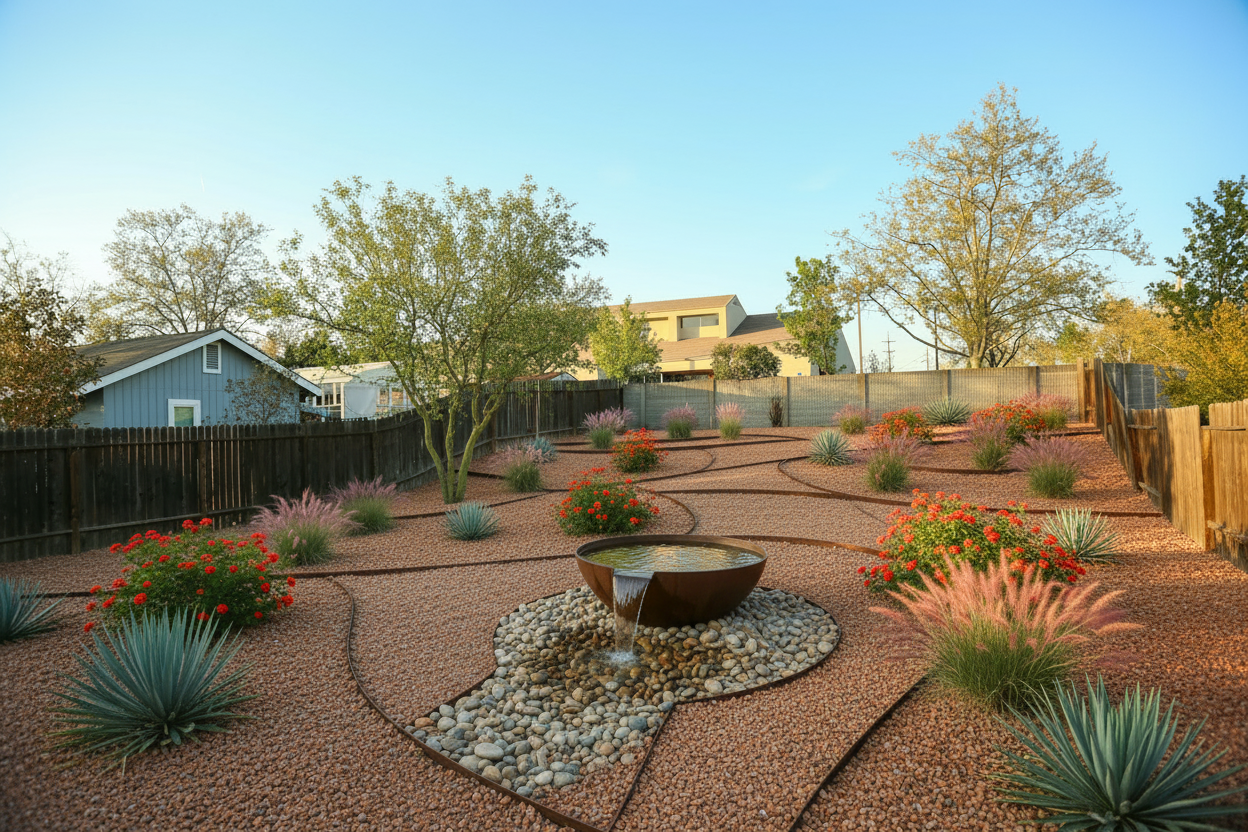
See this concept in the Renderspace gallery
The point is not a perfect plan. It is to show the homeowner that "no lawn" can look lush, structured and intentional on their own property. It is the same principle behind showing landscape clients the design before construction.
What should a xeriscape concept show?
- Planting density. The biggest fear is "bare," so show beds that look full.
- Structure. Edging, a defined path, a seating spot or a boulder grouping make the yard read as designed, not abandoned.
- Materials that match the house. Stone and gravel colors should work with the brick, stone or siding.
- The street view. For front yards, that is the view the homeowner and the neighbors care about.
The difference between an expensive-looking xeriscape and a gravel lot usually comes down to composition. I would avoid covering the entire yard in one material and scattering a few plants around. Use contrasting textures, defined planting beds, natural limestone boulders and a walkway that actually leads somewhere. In Central Texas, I'd lean toward Texas sage, red yucca, autumn sage and ornamental grasses where site conditions allow. With Renderspace, you can specify those plants, stone colors and edging materials in custom prompts instead of generating another generic desert landscape.
How do rebates and approvals fit in?
Many Texas homeowners first hear about xeriscape through a water utility rebate. In Austin, for example, Austin Water runs a WaterWise landscape rebate for converting turf to a water-wise landscape, with guidance on compost-amended soil, drip irrigation and native or adapted plants. Its FAQ is clear on timing: "Any work started before receiving approval from Austin Water will not qualify." It also says at least 75% of the conversion area must have healthy turf grass to qualify.
That makes the order of operations important. A concept on the first visit helps the homeowner decide what they want before anyone touches the lawn, and before the rebate application goes in. Always check the current program rules with the utility; they are the authority, not the rendering.
If an HOA is involved, the same concept can sit next to the site plan and plant list in the submission. We cover that in HOA landscape presentation packages.
In Austin, I'd make water use and HOA restrictions part of the conversation before discussing finishes. A yard can look beautiful in a rendering and still need changes to meet neighborhood guidelines or local water requirements. The summer heat also makes plant selection and irrigation planning important. I'd encourage contractors to show homeowners two realistic directions: one with fuller drought-tolerant planting and another with more stone and defined beds. Then verify which plants and materials make sense for that property.
What can't a xeriscape rendering do?
It cannot tell you plant spacing, irrigation layout, grading or drainage, and it is not a planting plan, a permit drawing or a rebate document. Plants in a concept are a close visual, not a guaranteed species list. Label it as a concept, and keep the plant list and specs in your proposal.
For the patio and hardscape side of the same job, see hardscape visualization from a job-site photo.
What this looks like on a real job
Here's how I'd approach the next turf conversion consultation using Renderspace. Start with a photograph from the curb showing the lawn, driveway, existing trees and front entrance. I'd ask the homeowner whether their priority is reducing water use, improving curb appeal or spending less time maintaining grass.
For the first concept, I'd prompt for decomposed granite paths, natural limestone borders, Texas sage, red yucca and clusters of ornamental grasses. Then I'd show a second version with denser planting and less exposed gravel.
Renderspace's prompt flexibility makes those details easy to explore. We could change the stone color, add a flagstone walkway or introduce sculpted planting beds without abandoning the original concept. Once the homeowner likes the direction, the contractor can develop the actual planting, irrigation and grading plans.
Frequently asked questions
Can I design a xeriscape from a photo of the yard?
Yes. With Renderspace you upload a phone photo of the yard and get a photorealistic xeriscape concept on that property in about 30 seconds. It is a visual concept, not a planting or irrigation plan.
Will a xeriscape concept help with a rebate application?
The concept helps the homeowner decide what they want before work starts. Rebate rules, required documents and approvals come from the utility, so check the program directly.
Can I use the renders in my marketing?
On every paid Renderspace plan you can use renders in proposals, on your website, on social and in ads. Reselling the images is not allowed. You can browse more xeriscape concepts in the Renderspace gallery.
The lawn comes out when they can see what replaces it
Picture the curb on a hot afternoon. Brown patches, a sprinkler head sticking up, a homeowner who wants out of watering but is quietly afraid of ending up with a rock pile. You take one photo. About 30 seconds later they are looking at their own house behind full beds of native plants, a clean steel edge, a stone path to the door.
Now the fear is gone, and the questions are about which grasses and whether the path can curve.
Fast photorealistic concepts help contractors win bids faster, because homeowners commit sooner when they see their own space finished before the quote. With xeriscape, that picture is the whole sale: it replaces "rocks and cactus" with their yard, done right.
As someone building Renderspace in Central Texas, I think water-wise landscaping deserves better visual representation. A xeriscape shouldn't feel like a compromise. I'd tell any contractor quoting a conversion to show the homeowner how beautiful their yard could be, right down to the stone finishes and plant varieties, before asking them to give up the grass.
Try it on your next turf conversion. The First Job Test is $19.99 for 40 credits over 7 days, and it works from a phone photo.
Would rather have the concepts made for you? Human Polish render packs handle that.
Related reading
- Hardscape Visualization: Turn a Job-Site Photo Into a Client-Ready Concept
Hardscape sells on permanence, which makes it hard to sell with words alone. A photo-to-concept workflow on-site closes the picturing gap without replacing engineering.
- HOA Landscape Presentation Packages: What to Include for Design Review
A practical checklist for HOA and design-review submissions, with clear scope on what presentation packages include — and what approval authority remains with the association.
- How Landscape Contractors Show Clients a Design Before Construction
Standing in a backyard describing a patio with your hands is a hard sell. Showing the same idea on their actual property, in minutes, changes the conversation.