
Should Landscapers Charge a Design Fee?
The case for and against charging a landscape design fee, how to credit it toward the project, and how a quick concept makes homeowners glad to pay it.
By KeSean Fallon
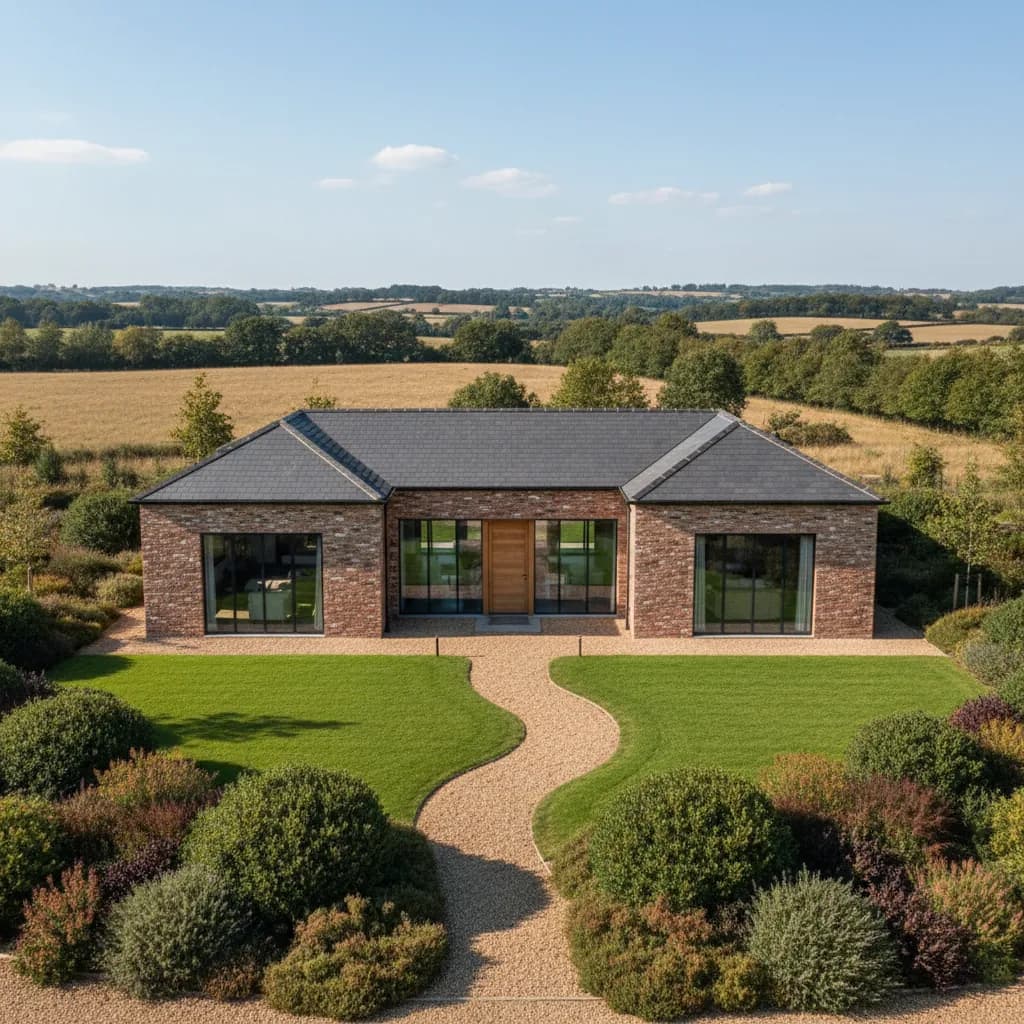
Many design-build landscapers do charge a design fee, and a common approach is to credit it toward the project if the client hires you to build it. The fee filters out shoppers and pays for real design time, but it only works if the homeowner already believes your design is worth paying for, which is where a quick concept on the first visit can help.
This is one of the oldest arguments in the trade. Free designs win you more appointments. Paid designs win you better ones.
My take is that free design is often expensive in the one place small contractors can't afford it: time. A site visit is one thing. Spending several evenings refining patios, planting beds, lighting and materials for someone who hasn't agreed to hire you is another. The homeowner may simply be shopping ideas, not ready to sign anything. I wouldn't stop showing people what their yard could look like. I'd separate a quick preview from the real design work, and make it clear when one ends and the other begins.
Should landscapers charge for design?
If design takes real hours, the case for charging is strong. The National Association of Landscape Professionals talked to two design-build owners about it (NALP, The Edge).
Mark Borst of Borst Landscape & Design put the core argument simply: "Why would I give all my expertise away for free?" Cole Weller of Weller Brothers Landscaping pointed to lead quality: "It definitely does help filter down or vet our customers, which is really important to us too."
Weller was also clear about the goal: "We're not making our money off design fees." The fee is there to protect the design time and find serious buyers, not to be a profit center.
Why do some contractors still give design away?
The hesitation is real, and the same NALP article names it:
- Fear of losing the lead. If a competitor offers free design, charging can feel like handing them the job.
- Market habits. In some areas, free design is what homeowners expect.
- Sales team pushback. Salespeople used to offering free designs may resist charging, so owners have to bring them along.
Free design is smart only when you know exactly what you're giving away. A fast concept on the first visit? Absolutely. Hours of revisions, quantities, site planning, and a drawing somebody else can build from? That's a slow leak. You can be generous without running an unpaid design department. Show the homeowner a strong direction, explain what the paid design includes, and credit the fee toward installation if that fits your business. The point is to sell your expertise, not exhaust it.
How do you credit a design fee toward the project?
The common structure is simple: the client pays for the design up front, and if they hire you to build it, the fee is credited back against the installation. Borst describes doing exactly that, with the design cost built into the project estimate so the company still recovers its time.
A few practical choices to make before you start:
- How you price it. By estimated design hours at an hourly rate, or as a flat fee by project size. Weller's company uses an hourly rate with minimums.
- What the client gets. A plan, a plant list, concept images, a revision or two. Write it down.
- Who owns the plan if they do not hire you. Decide and put it in the agreement.
- When the credit expires. A deadline keeps a paid design from turning into a free one years later.
In Central Texas, I'd explain a design fee by pointing to the actual work involved: grading on a sloped lot, drainage around the house, limestone or other hardscape selections, and the decisions surrounding shade and planting. A quick concept can show the finished look, but it won't solve those site questions. That's the distinction I'd put in front of an Austin homeowner before asking them to pay for a proper design.
What makes a homeowner willing to pay for design?
Seeing what they would be paying for. Asking for a fee on a promise is a hard conversation. Asking for it after the homeowner has already seen their own yard with a new patio, a pool or new planting is a different one.
That is where a fast concept fits. On the first visit, you take a phone photo and generate a photorealistic concept of their real yard in about 30 seconds with a tool like Renderspace. It is not the full design. It is a preview that shows the direction and proves you can see what they cannot yet.
Then the fee conversation changes from "pay me to find out" to "you have seen the direction; the design makes it buildable." Plans start with the $19.99 First Job Test; see Renderspace pricing.
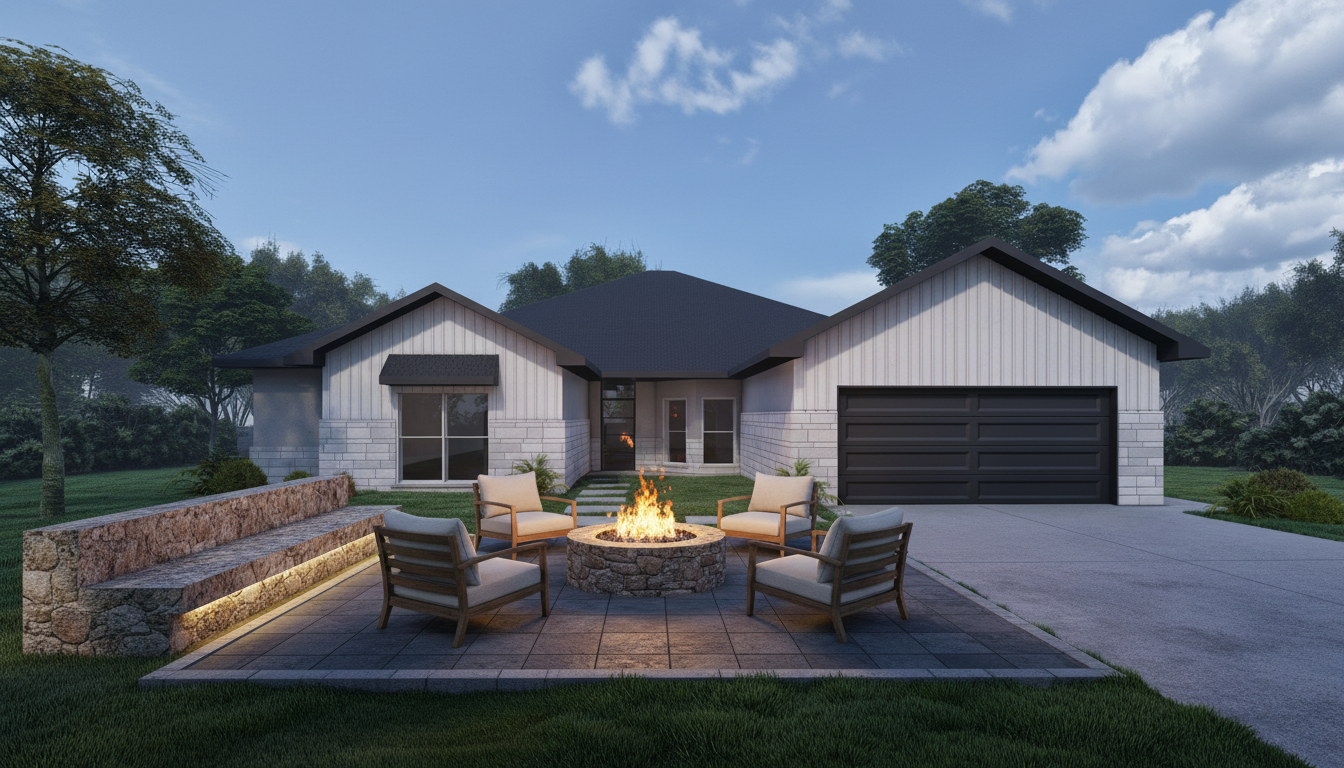
See this concept in the Renderspace gallery
Keep the line clear in your proposal: a concept rendering is for visualization and presentation, not a construction drawing, engineered plan or permit set. For teams that want more than a preview, Human Polish offers basic 2D or 3D layout plans for presentation, and outsourcing visualization has its own trade-offs.
What this looks like on a real job
Here's how I'd approach the next landscaping consultation where a design fee comes up. Say the homeowner wants to replace a patchy lawn with a limestone patio, planting beds and a shaded seating area. Before discussing paid design work, I'd take a photo of their yard and generate a concept in Renderspace.
I'd start with the materials they mentioned, then use custom prompts to explore specific details: cedar pergola beams, native planting arrangements or a different stone finish. The goal is to get their reaction, not pretend the design is finished.
Once we've agreed on a direction, I'd explain what the fee actually buys: a measured layout, material selections, quantities and revisions needed to prepare the project for construction. I'd also explain whether that fee gets credited toward installation. The homeowner sees the idea for free, but the detailed work behind building it has value.
For more on pricing your work without discounting it, see how to win more landscaping bids without cutting price and are 3D renderings worth it for contractors?
Frequently asked questions
Do most landscape designers charge for design?
Practices vary by company and market. Some design-build firms charge and credit the fee toward installation; others still offer free design to win appointments. Decide based on how much design time each project takes you.
Should the design fee be refundable?
A common approach is to credit it toward the installation if the client hires you, rather than refund it if they do not. Put the terms, and when the credit expires, in writing.
Can a quick AI concept replace a paid design?
No. A concept shows the look on the client's real property. A full design covers layout, quantities, plants and the details your crew builds from. Use the concept to start the conversation and the paid design to finish it.
Stop giving away the hours. Keep giving away the picture.
Here is the trap with free design. You spend the evenings, you send the drawing, and the homeowner takes your thinking to whoever is cheapest. The fix is not to show less. It is to show the right thing at the right moment.
Show them their own yard, finished, on the first visit. Let them ask for travertine instead of pavers and see it while you stand there, because the rest of the scene stays put. Now they know what your design will give them, and paying for it feels like the next step instead of a gamble.
That is the quiet power of a fast, photorealistic concept. It helps contractors win bids faster, because homeowners commit sooner when they can see their own space finished before the quote.
I built Renderspace because I don't think contractors should have to choose between spending hours on an expensive presentation and showing a homeowner nothing but an estimate. There's room in between. A quick, flexible concept lets you demonstrate your vision without giving away the detailed design work that makes a project buildable.
Try it on your next consultation. The First Job Test is $19.99 for 40 credits over 7 days, and it works from a phone photo.
Related reading
- How to Win More Landscaping Bids Without Cutting Price
Why landscapers lose bids they should have won, how to choose and price the right jobs, and how a picture of the client's own yard makes your proposal the easy yes.
- Are 3D Renderings Worth It for Contractors?
What 3D renderings cost, when a detailed model earns its price, and when a fast photo-based concept does the job better at the bidding stage.
- Outsourced Visualization for Landscape Contractors: When It Makes Sense
A practical framework for deciding when to hire, freelance, self-serve, or use Human Polish as your outsourced visualization department.