
AI Rendering Software for Pool Contractors: What to Look For
What pool contractors should look for in AI rendering software, how a photo-to-concept workflow fits a sales call, and what an AI pool rendering can't do.
By KeSean Fallon
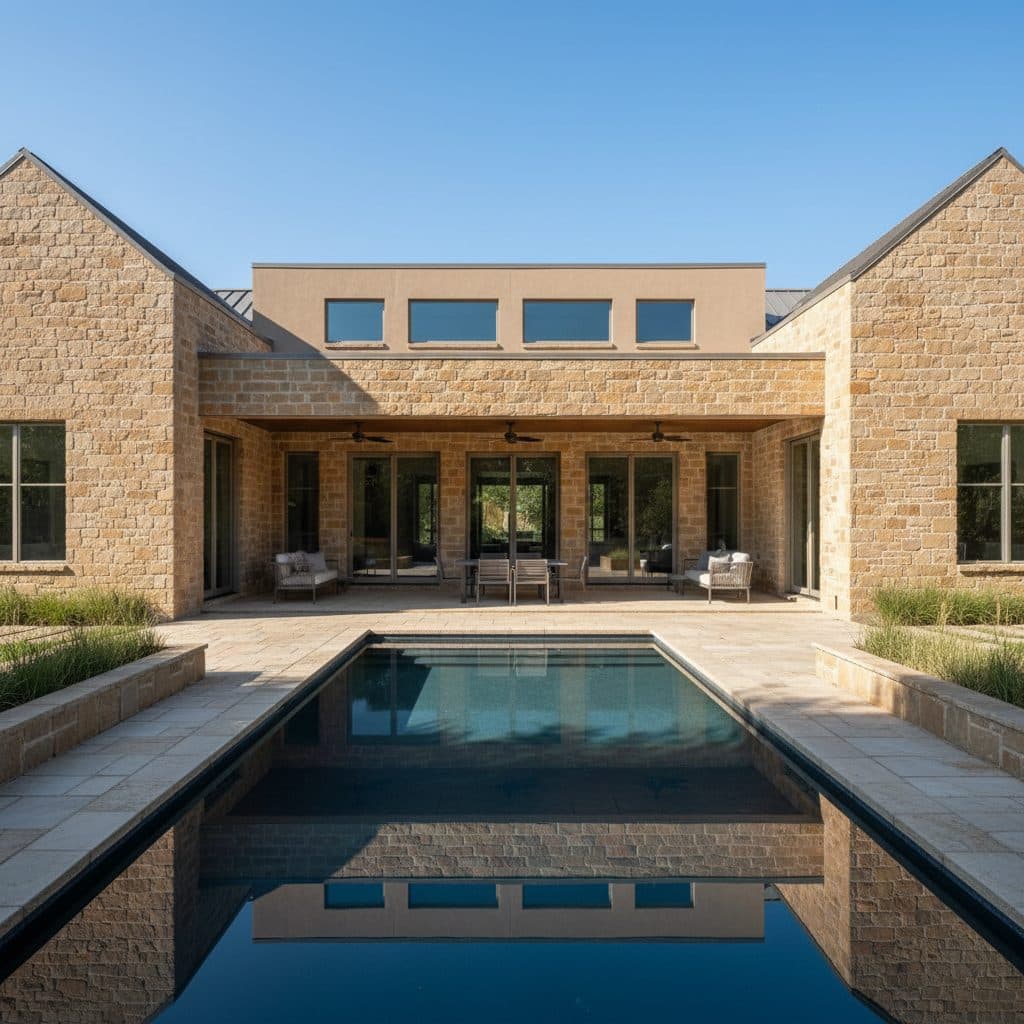
The best AI rendering software for pool contractors turns a photo of the client's actual backyard into a photorealistic pool concept while you are still on the visit. Look for three things: it starts from a site photo, it returns a result in seconds rather than days, and it lets you change one thing at a time without starting over.
Most pool sales do not stall on price first. They stall because the homeowner is staring at grass and trying to imagine water, decking and a spa in a space they have only ever seen as lawn.
The hardest part of a pool walkthrough can be the distance between what the contractor describes and what the homeowner sees. Maybe the yard has an aging concrete patio, a few trees and a fence that makes the space feel smaller than it is. Rather than describing a generic pool, Renderspace lets the contractor work from that actual photo and spell out the details in a prompt: a curved pool, pale travertine coping, a raised spa, even specific landscaping around the deck. The homeowner has something recognizable to react to, and a way to describe what should change.
Why do pool sales stall before the contract?
A pool is one of the largest purchases a homeowner makes for their property, and they are being asked to commit to something they cannot see. Brochures and portfolio photos show someone else's yard. A 2D layout shows shapes on paper. Neither answers the question running through the client's head: what will my backyard look like?
That gap shows up in familiar ways:
- "We need to think about it" after a good meeting.
- The spouse who was not at the walkthrough wants to "see something first."
- The client gets two more bids, and the decision drifts to whoever shows them something they can picture.
Rapidly generating photorealistic renderings helps contractors win bids faster, because homeowners commit sooner when they see their own space finished before the quote.
What should pool contractors look for in AI rendering software?
There are a growing number of AI design tools, including pool-specific apps and general home design generators. Before you pick one, test it against the way you actually sell.
Does it work from a photo of the real yard?
Catalog scenes and empty templates are fine for inspiration. They do not close a sale. The tool should start from a phone photo you take on site, so the fence line, the house, the trees and the slope are the client's own.
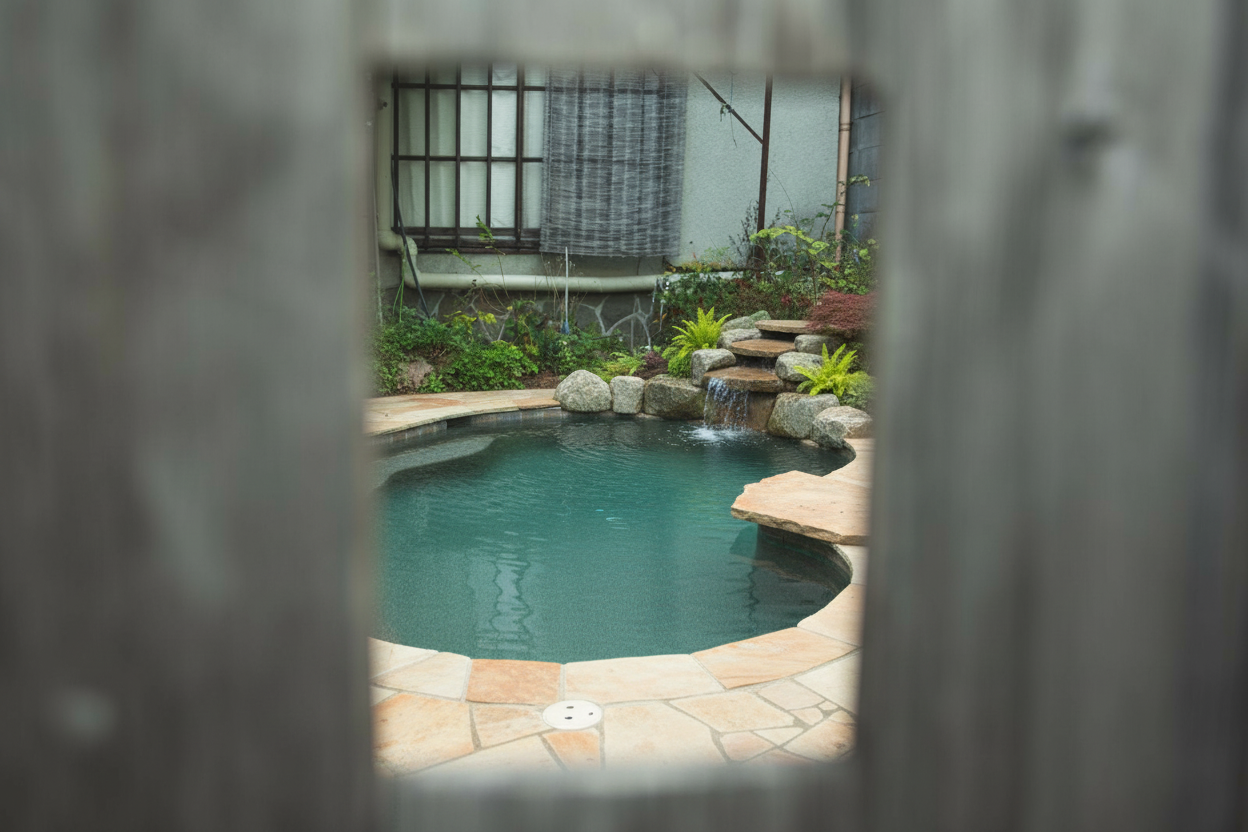
See this concept in the Renderspace gallery
How fast is the first concept?
If the result comes back tomorrow, you have lost the moment. With Renderspace, a render typically comes back in about 30 seconds (usually 20 to 40), which means you can generate it while you are still standing in the yard.
Can you change one thing without losing everything else?
Clients rarely accept the first version. They want a freeform shape instead of a rectangle, lighter coping, a spa on the other side. Renderspace carries your settings over, so you can change one thing at a time and keep the rest of the concept steady.
Does it cover the whole backyard, not only the pool?
Pool projects tend to grow into decking, a patio, an outdoor kitchen and landscaping. A tool that handles pool, patio, outdoor kitchen, landscape and exterior concepts lets you show the full project instead of a pool floating in grass.
Is the output good enough for the proposal?
Renderspace exports in 4K, and every paid plan may use renders in proposals, websites, social and ads. Plan details are on the pricing page.
People with boots on the ground know that the closing conversation can't always rely on logic or verbal promises. Homeowners need something that engages their emotions, and fulfills their hopes of having a more comfortable home. Today's world is a visual world, we are constantly shown images on social media that intrigue us. Why not then use visual proposals to help close deals, especially with the cost now lower than it's ever been?
How does a photo-to-concept workflow fit a pool sales call?
Here is a simple way to slot it into the visit you already run:
- Walk the yard and listen. Get the must-haves: shape, size range, spa, decking, shade, budget comfort.
- Take a clean photo from where the family will actually see the pool most, often the back door or the patio.
- Generate a first concept while you are still talking. Keep the first pass simple.
- Adjust one thing at a time as they react: shape, coping, deck material, spa placement.
- Save the version they point at and put it in the proposal next to the price.
For the patio and hardscape side of the same visit, see hardscape visualization from a job-site photo, and for more on showing the plan early, how to show landscape clients a design before construction.
The point is not to replace your design or engineering process. It is to give the client something to say yes to before you invest hours in a detailed layout.
What can't an AI pool rendering do?
Be clear with clients about this. An AI rendering is a concept for visualization and presentation. It is not an engineered pool plan, a permit set, a stamped drawing or a construction document. Excavation, setbacks, equipment pads, plumbing and electrical stay with your design process and the right professionals.
What this looks like on a real job
Take a fairly ordinary backyard: a concrete patio, grass up to a wooden fence and a tree the owner wants to keep. A contractor could photograph that view and generate a first concept with a rectangular pool and simple deck. That's useful, but the real advantage comes when the homeowner starts getting specific.
Perhaps they want a freeform edge instead of straight lines. The contractor can describe that in plain language, along with lighter limestone coping, darker pavers, a raised spa tucked toward the far corner, and low hedges around the seating area. If the owner prefers slate over limestone, or wants a pergola and an outdoor kitchen included, those details can go into the next prompt rather than remaining vague promises.
None of this establishes final dimensions or feasibility. That still requires measuring and design review. What it does is make the proposal conversation less abstract: the materials, layout and atmosphere can be discussed as actual visual choices.
Frequently asked questions
Can I design a pool from a photo of my client's backyard?
Yes. With Renderspace you upload a phone photo of the yard and get a photorealistic pool concept on that property in about 30 seconds. It is a visual concept, not an engineered plan.
Is AI pool rendering software accurate enough for a contract?
It is accurate enough to agree on a direction: shape, placement, materials and overall look. Final dimensions, engineering and permits still come from your normal design and construction process.
What does it cost to try?
The First Job Test is $19.99 for 40 credits over 7 days. Professional is $99 a month for 500 credits if you continue.
Can I use the renderings in my marketing?
Yes. Every paid plan may use renders in proposals, websites, social and ads. Reselling the images is not allowed.
For pool contractors, the details are the sale. A homeowner might care less about the pool's overall outline than whether the coping is pale limestone, the deck is slate, or a planting bed frames the view. Renderspace supports custom prompts for those specifics. That flexibility matters because the goal isn't just a beautiful picture. It's their backyard, on their terms.
The pool your client buys is the one they can already see
Picture the next backyard you walk. Bare grass, a chain-link fence, a homeowner with their arms crossed, half-listening while you describe a pool they cannot imagine. Now picture holding up your phone and showing them that same yard with the water in, the decking down and the spa where they asked for it. Their yard. Their house in the background. About 30 seconds after you took the photo.
That is the moment the conversation turns. They stop asking "how much" in the abstract and start asking "can we make it a little wider." You are already working through the details.
Fast, photorealistic concepts help you win bids faster. Homeowners commit sooner when they see their own space finished before they see the quote.
You do not have to bet much to find out. The First Job Test is $19.99 for 40 credits over 7 days, and it works from the phone already in your pocket. Take it to your next pool appointment and see what happens when the client can see it.
If you would rather have a batch of concepts made for you, Human Polish render packs are there for teams that want it done for them.
Related reading
- Hardscape Visualization: Turn a Job-Site Photo Into a Client-Ready Concept
Hardscape sells on permanence, which makes it hard to sell with words alone. A photo-to-concept workflow on-site closes the picturing gap without replacing engineering.
- How Landscape Contractors Show Clients a Design Before Construction
Standing in a backyard describing a patio with your hands is a hard sell. Showing the same idea on their actual property, in minutes, changes the conversation.
- AI Landscape Design Software for Contractors: What It Does Well—and What It Doesn't
AI landscape tools are fast at concepts from real photos. They are not site plans, engineered drawings, or permit packages. Here is how to evaluate the category without wasting an afternoon.