
How Long Does a Landscape Rendering Take?
Studio, freelancer and AI timelines for a landscape rendering, what drives each one, and why turnaround matters so much at the bidding stage.
By KeSean Fallon
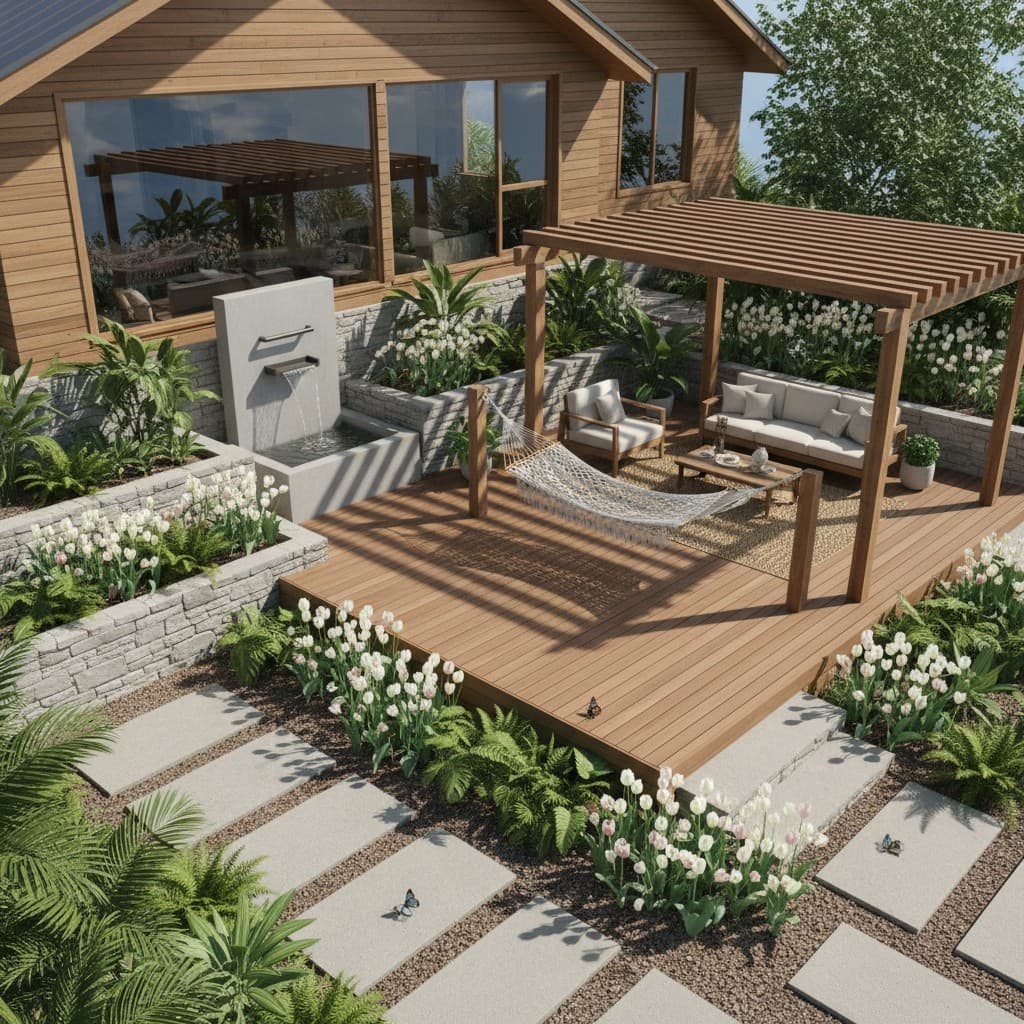
A landscape rendering takes anywhere from about 30 seconds to a few weeks, depending on who makes it. AI tools like Renderspace return a photorealistic concept from a job-site photo in about 30 seconds, while studios and freelancers building a 3D model typically take days, and longer once revisions start.
For a contractor, the real question is not only how long it takes. It is whether the rendering arrives while the client still cares.
A rendering delay doesn't start when the designer opens the file. It starts the moment you tell a homeowner, "I'll send something next week." From there, every unanswered question has room to grow. Will those pavers look too dark? Is the patio going to swallow the lawn? Would a pergola work better than an open seating area? None of that means the client has lost interest. They simply have nothing concrete to react to yet. A quick visual, especially one you can adjust with specific material and layout prompts, keeps those questions inside the conversation.
How long does a landscape rendering take from a studio?
Traditional rendering studios build a 3D scene, light it, render it and retouch it. ArchiCGI, a rendering studio, lists 3 to 5 days for medium projects such as full house exteriors, and 1 to 3 weeks for larger exterior projects. They also note that each revision round adds time.
What drives a studio timeline:
- The brief. Missing measurements or references mean back-and-forth before work starts.
- Modeling. Without CAD files, the property has to be built from scratch.
- Revisions. Every "can we try it with a different paver" goes back into the queue.
- The queue itself. Your job waits behind everyone else's.
How long does a freelancer take?
Freelance marketplaces are often quicker to hire, but timelines vary widely by artist, workload and revisions. The same drivers apply: a 3D model has to be built, and every change is a new request. We cover the trade-offs in the Fiverr alternative for contractors.
How long does an AI landscape rendering take?
With Renderspace, a render typically comes back in about 30 seconds, usually between 20 and 40. You take a phone photo of the yard, choose the direction, and get a photorealistic concept on the client's real property. Settings carry over, so the next change takes about the same time, and you can change one thing at a time.
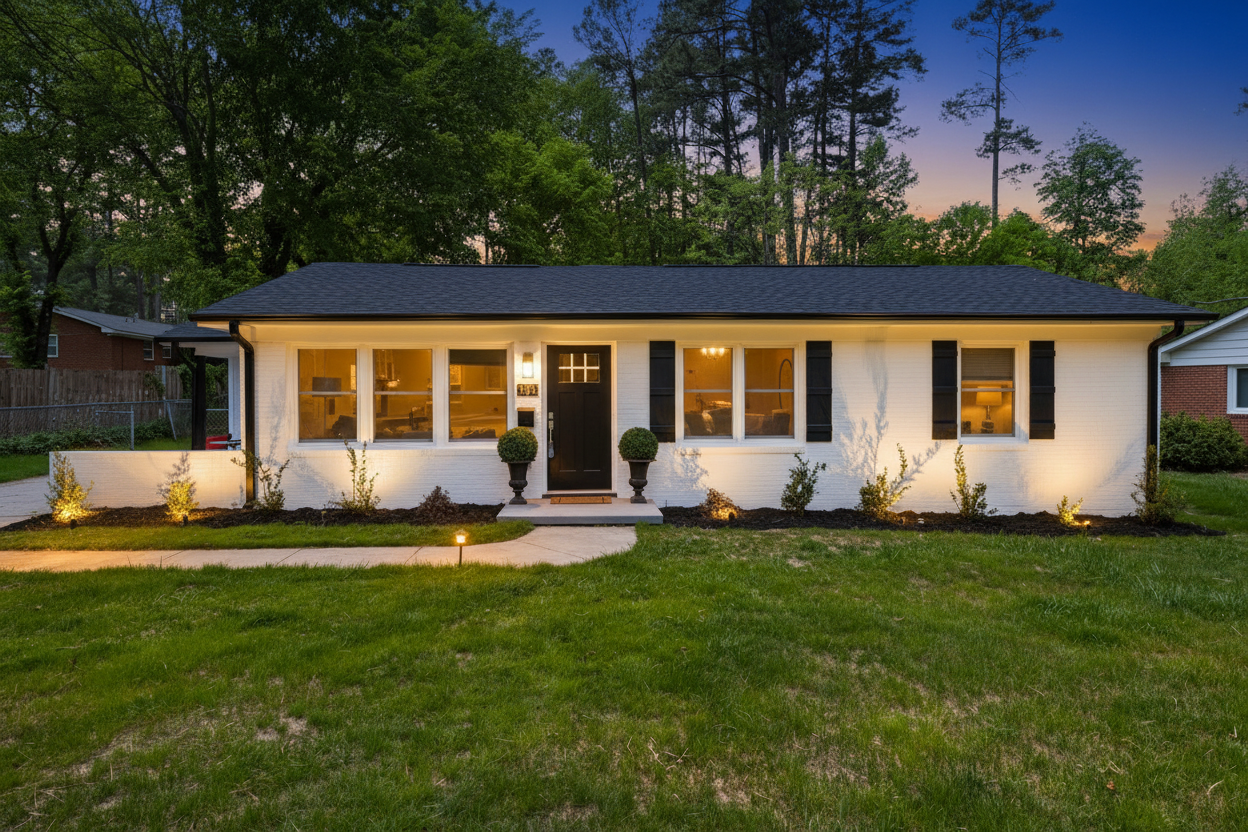
See this concept in the Renderspace gallery
You can browse more photo-to-concept examples in the gallery.
If you want concepts made for you instead, Human Polish render packs have published turnaround times:
| Option | First results | Turnaround |
|---|---|---|
| Renderspace self-serve | About 30 seconds per render | Each change takes about the same time |
| Human Polish, 25 concepts | First batch of 5 | 24 to 48 hours |
| Human Polish, 50 concepts | First batch of 10 | 48 to 72 hours |
| Human Polish, 100 concepts | First batch of 15 | 3 to 5 business days |
| Build-Ready Essentials, 2D plans | n/a | 3 to 5 business days |
| Build-Ready Essentials, 3D | n/a | 5 to 10 business days |
All of these are for visualization and presentation, not permit sets, stamped drawings or construction documents.
Why does turnaround time matter so much for contractors?
Because interest has a shelf life. The homeowner is most excited on the day you walk the yard together. Every day between that visit and the moment they see something is a day for second thoughts, other bids and "let's wait until spring."
Rapidly generating photorealistic renderings helps contractors win bids faster. When homeowners see their own space finished before the quote, they commit sooner.
I think contractors often ask too much of the first rendering. They want it polished enough to be a final presentation before they even know whether the homeowner likes the direction. That reverses the order of the sale. Start with a rough decision, not a finished design: show the space, ask what feels off, and use a custom prompt to swap brick for limestone or move the pergola. Save the measured drawings and detailed modeling for the stage when precision actually matters.
When is it worth waiting for a slower rendering?
Speed is not everything. A detailed studio model can make sense for large commercial work, marketing hero images, or when exact dimensions have to be shown in a presentation. A sensible split for many contractors:
- First visit: a fast concept from a photo to agree on direction.
- After the client commits to a direction: more concepts or a done-for-you pack if you need a set.
- For build work: your normal design, engineering and permitting process.
For more on matching the method to the job, see AI rendering vs traditional rendering services and what late-night rendering really costs before an estimate.
What this looks like on a real job
Consider two ways the same backyard consultation could unfold. The property has an aging concrete patio, a wooden fence and a narrow planting strip. The homeowner wants an outdoor entertaining area but hasn't settled on the materials. Traditionally, the contractor might take measurements, send notes to a designer and return later with a finished image. That approach works, but the first conversation ends without a visual direction.
With Renderspace, the contractor could photograph the yard and generate an initial concept before leaving. From there, the homeowner can explore specific choices. A custom prompt might replace concrete with slate pavers, introduce a cedar pergola, add sculpted hedges or specify marble accents around an outdoor seating area. Instead of commissioning an entirely new design to explore another material, they can generate another variation.
Neither approach guarantees a contract. The advantage is being able to discover what the homeowner actually prefers during the first meeting, while those preferences are fresh.
Frequently asked questions
How long does a 3D landscape rendering take?
From a studio, days to weeks depending on size and revisions. One studio lists 3 to 5 days for a full house exterior. An AI concept from a photo with Renderspace typically takes about 30 seconds.
Why do renderings take so long?
Traditional renderings require building a 3D model, lighting, rendering and retouching, and each revision round goes back through that process.
Can I get a landscape rendering the same day?
Yes. With Renderspace you can generate a concept on the visit in about 30 seconds. A 25-concept Human Polish pack has a 24 to 48 hour turnaround, starting with a first batch of 5 tailored to the conceptual vision of your choosing.
What matters to me about turnaround time is what it does to the conversation. Contractors should be able to show an idea while the homeowner is still explaining it, not reconstruct that conversation a week later. That's the value I wanted Renderspace to offer: quick visuals with enough prompt flexibility to explore the details, not just produce a generic pretty yard.
The fastest rendering is the one they see before you leave the driveway
Picture the moment. You have walked the yard, listened to what they want, and they are already wondering what it will cost. Instead of saying "I'll get you some drawings next week," you take a photo and, about 30 seconds later, hand them their own backyard finished. Their patio. Their fence line. The fire pit exactly where they pointed.
That is the meeting where the decision starts. While your competitors are still scheduling a designer, your client is choosing between two paver colors on your screen.
Fast, photorealistic concepts help contractors win bids faster, because homeowners commit sooner when they see their own space finished before the quote.
The risk is small. The First Job Test is $19.99 for 40 credits over 7 days, and it works from a phone photo. Use it on your next walkthrough and see how the conversation changes.
If your team would rather have concepts made for you, Human Polish packs deliver a first batch within days.
Related reading
- AI Rendering vs. Traditional Rendering Services for Contractors
A contractor-focused comparison of AI self-serve, Human Polish production, and traditional rendering studios across the workflow dimensions that actually matter.
- The Hidden Cost of Late-Night Rendering Before a Client Estimate
A Sunday-night estimate prep scene illustrates the real cost of slow visualization — and when self-serve or outsourced production buys the time back.
- Fiverr Rendering vs. AI-Assisted Concepts for Contractors
Freelance renders, self-serve AI concepts, and Human Polish each optimize for different moments. Here is how to choose without assuming one path replaces the others.